Modular Office Design
Introduction
The way businesses use office space has changed dramatically over the last few years. Startups are scaling faster, teams are becoming more flexible, and hybrid work models are influencing how workplaces operate. In this environment, companies can no longer afford office layouts that become outdated the moment their team expands. Businesses need spaces that can evolve without forcing them into repeated renovations, relocations, or expensive redesign projects. This is where modular office design has become a practical solution. Rather than creating a workplace around fixed walls and rigid layouts, modular offices allow companies to build adaptable environments that change alongside their operations.
Why Traditional Office Layouts Fail Growing Companies
Many companies initially choose a conventional office layout because it appears structured and professional. However, what works for a team of ten may become restrictive when the workforce doubles within a year. Traditional office spaces are designed around permanence, making even small modifications time-consuming and expensive. Businesses often find themselves investing significant resources in moving walls, redesigning workstations, and creating additional rooms. The challenge becomes more noticeable during periods of growth. Departments evolve, collaboration needs change, and management structures expand. Fixed layouts struggle to accommodate these transitions efficiently. Instead of supporting organisational agility, the office becomes an obstacle.
What Makes an Office Truly Modular?
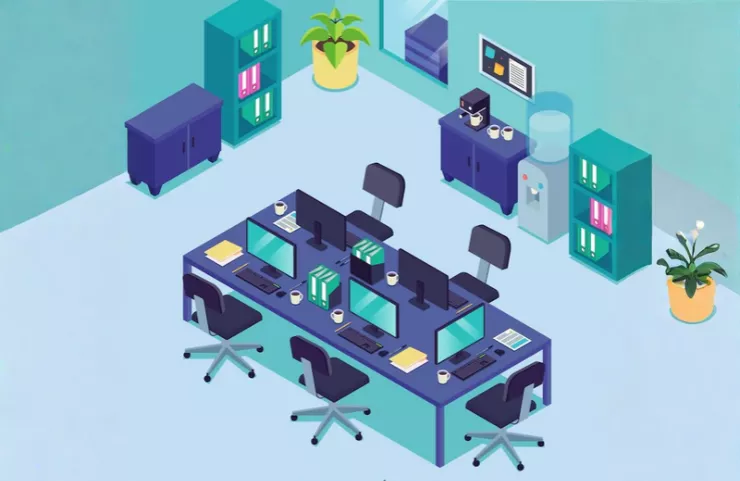
A truly modular office is more than simply purchasing moveable furniture. It is a strategic approach to workspace planning that focuses on flexibility, scalability, and functionality. Every element within the office is designed to adapt to changing business requirements without major construction or disruption. Teams can reshape the environment based on operational priorities rather than structural limitations. In a modular workspace, workstations can be reorganised to accommodate new team members, private areas can be created when confidentiality is required, and collaborative zones can expand during project-intensive periods. Instead of maintaining separate spaces for every activity, businesses create multi-functional environments that support a variety of work styles. The result is a workplace capable of evolving continuously while maintaining productivity, efficiency, and employee satisfaction. This adaptability is what separates modular design from conventional office planning.
Signs Your Business Needs a Modular Office Design
Many businesses continue operating in unsuitable office environments because they assume expansion challenges are part of normal growth. However, certain warning signs indicate that the workspace may no longer support operational needs effectively. If employees regularly struggle to find meeting space, departments feel overcrowded, or office changes require constant investment, the existing layout may be limiting business performance. Another common indicator is workforce unpredictability. Companies that frequently hire, restructure teams, or accommodate remote workers often find fixed layouts inefficient.
Modular Office Design for Different Business Stages
The workspace needs of a business differ significantly depending on its stage of development. Early-stage startups typically require affordable solutions that can accommodate uncertainty. These companies may begin with a small team but need the ability to scale rapidly without committing to long-term infrastructure investments. Modular design offers the flexibility needed during this critical growth phase. As organisations expand, operational complexity increases. Growing businesses require dedicated departments, private meeting rooms, and areas that support both collaboration and focused work. Modular layouts allow these modifications without requiring a complete redesign.
Modular Office Design and Hybrid Work
Hybrid work has changed the way businesses think about office occupancy. Many employees divide their time between remote and office-based work, making traditional assigned seating increasingly inefficient. Empty desks and underutilised meeting rooms represent wasted resources that organisations can no longer ignore. Modular office design provides a practical response to these challenges. Flexible workstations can accommodate varying attendance levels, while shared collaboration areas support employees when they come on-site. The workplace becomes a destination for teamwork, innovation, and connection rather than simply a location where individuals sit at fixed desks.
Space Optimisation
Many businesses assume they need a larger office when teams start growing, but often the real issue is inefficient space usage. Modular office design focuses on making every square foot productive and purposeful. Instead of dedicating fixed areas to a single function, spaces can be adapted throughout the day based on business needs. A training room can become a meeting space, while a collaborative zone can temporarily serve as a project war room. This flexibility helps businesses avoid unnecessary rental expenses while improving workplace efficiency. At Dfactory, growing teams can benefit from workspace configurations that support changing requirements without the burden of long-term infrastructure commitments. For startups and SMEs, better space utilisation often translates directly into better business outcomes.
Client Impressions
An office is often the first physical representation of a company’s brand. Clients, investors, and business partners form opinions within minutes of entering a workspace. A modular office design helps businesses create professional environments that can be adjusted for different occasions. Whether hosting a client presentation, conducting investor meetings, or organising workshops, the workspace can be reconfigured to match the event’s purpose. This level of adaptability creates a polished and professional impression without requiring multiple dedicated rooms. Dfactory provides businesses with modern workspaces that balance professionalism and flexibility, helping companies present themselves confidently while maintaining operational efficiency. An adaptable office not only supports employees but also strengthens brand perception.
Faster Team Scaling
One of the biggest challenges for startups and growing companies is keeping office infrastructure aligned with hiring plans. New employees often require additional desks, meeting facilities, and collaborative work areas. In traditional offices, accommodating growth may involve costly renovations or even relocation. Modular office design eliminates many of these challenges by allowing businesses to expand within existing layouts. Workstations can be added, departments can be reorganised, and private areas can be created with minimal disruption. This supports growth without affecting day-to-day operations. Dfactory understands the dynamic nature of scaling businesses and offers flexible workspace solutions that help teams grow smoothly. When office infrastructure can evolve quickly, businesses are better positioned to seize new opportunities and maintain momentum.
Community Advantage
One of the biggest benefits of modular office design is its ability to support collaboration without sacrificing flexibility. According to
coworking spaces, modern shared workplaces help businesses optimise resources while encouraging professional interaction and knowledge sharing. Startups and small businesses often gain valuable opportunities by connecting with like-minded professionals within the same environment. Instead of operating in isolation, teams can learn from neighbouring businesses, exchange ideas, and build strategic partnerships. At Dfactory, this community-driven approach complements modular workspace planning by creating an ecosystem where businesses can expand their networks while maintaining the flexibility needed for growth. A workspace that combines adaptability with meaningful connections often becomes a catalyst for long-term success.
FAQs
Q.1: What is modular office design?
Ans. Modular office design is a flexible workspace approach that uses adaptable layouts, movable partitions, and scalable furniture to support changing business needs.
Q.2: Why is modular office design important?
Ans. It helps businesses adjust their workspace without costly renovations, making growth and reorganisation easier.
Q.3: Is modular office design suitable for startups?
Ans. Yes, startups benefit from modular offices because they can expand teams and workspace requirements without significant upfront investment.
Q.4: How does modular office design improve productivity?
Ans. It creates dedicated areas for collaboration, meetings, and focused work, helping employees work more efficiently.
Q.5: Can modular offices support hybrid work?
Ans. Yes, modular offices allow businesses to reconfigure spaces for shared desks, remote collaboration, and flexible attendance schedules.
Conclusion
Ready to upgrade to a workspace that grows with your business? Whether you’re launching a startup, expanding your team, or adopting a more flexible way of working, choosing the right office environment can make a significant difference. Dfactory in Vasai West offers affordable, scalable, and community-driven workspace solutions designed to support your business at every stage of growth. Explore flexible cabins, dedicated desks, and collaborative spaces by visiting
dfactory.org or calling
+91 7218311355 today.


















 Home